

Dual interface cards are ‘hybrid’ cards equipped with both contact and contactless technology. Dual interface card vs contactless card comparison shows that, in dual interface cards, a single chip manages both contact and RFID contactless transmission, allowing them to function as both contact cards and RFID cards.
Dual interface cards operate in the HF (High Frequency) range at 13.56 MHz. They have similar features to microprocessor-based contact cards, as they integrate a mathematical microprocessor that enables dual interface card data encryption and decryption, and usually include an operating system.
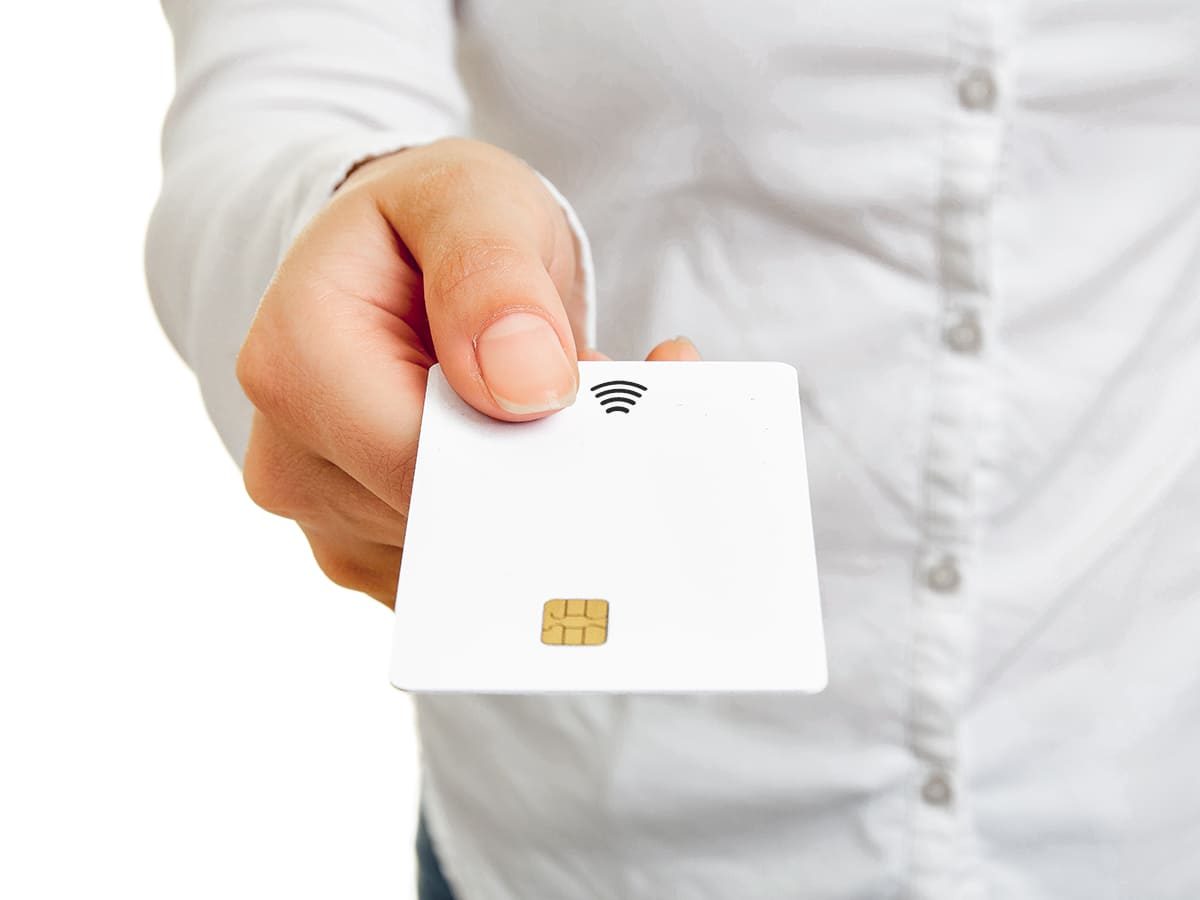

Dual interface chip cards for secure payments in EMV networks;
Dual interface smart cards for payment in private networks;
Regional service cards.
The benefits of dual interface cards primarily concern security, combined with high durability:
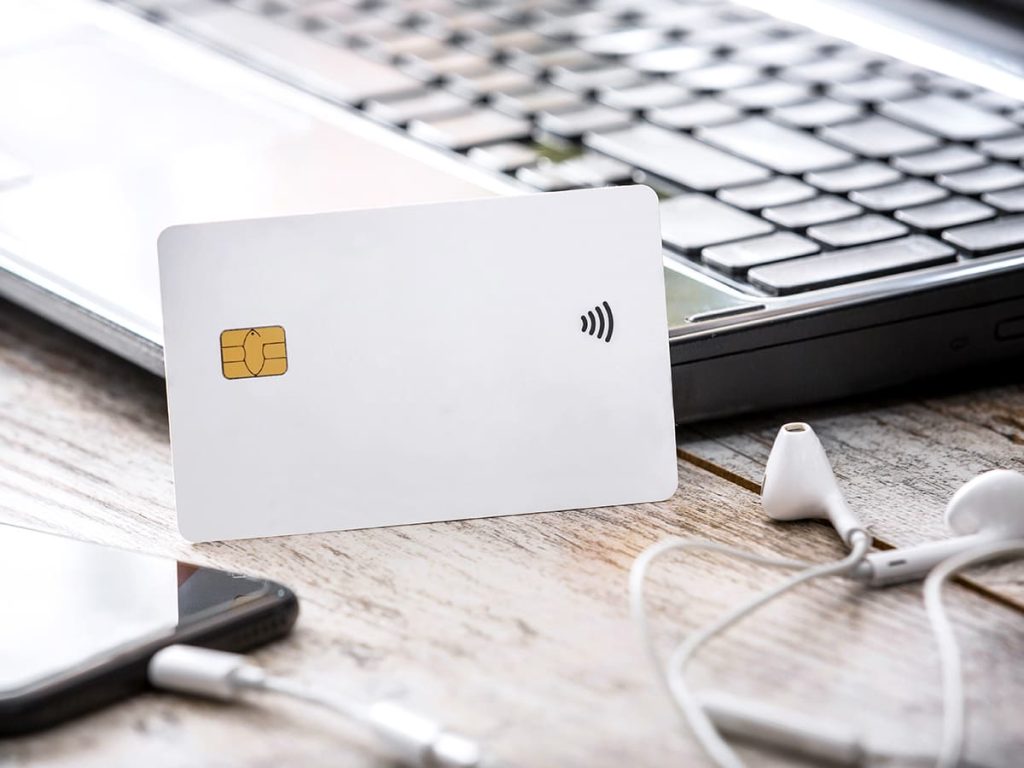
These cards offer a range of customization options, allowing you to create the best dual interface cards for your business needs.
At Partitalia, we produce and supply customizable dual interface card for secure transactions, in various materials:
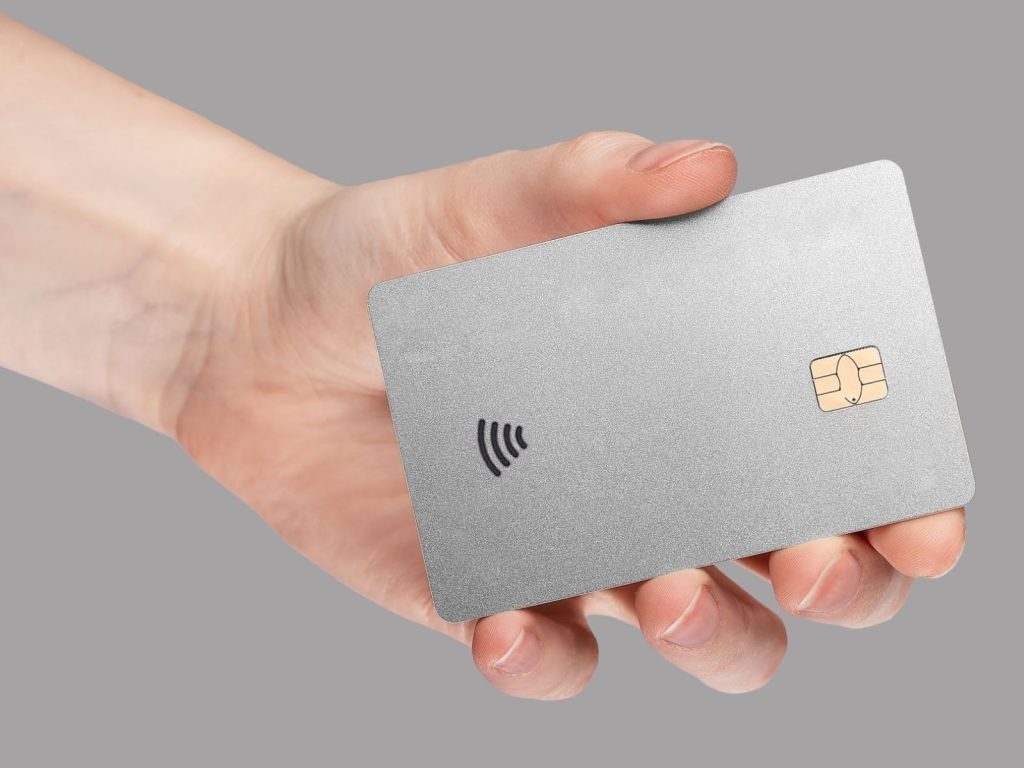
Degradable PVC and recycled PVC, which retain the technical properties of standard PVC while being more sustainable.
Logos, images, texts, and other graphic elements can be printed on the card surface using various printing technologies, including 4-colour offset printing, silkscreen printing, digital printing, UV spot varnish, and hot stamping.
Customisation of dual interface cards, such as the inclusion of variable data like the cardholder’s name or card number, is carried out using thermographic printing, laser printing, inkjet printing, and embossing.
We have collected the main questions about dual interface cards, a technologically advanced and very secure type of smart card.
Dual interface cards are hybrid cards that combine two technologies, contact and contactless RFID. In this type of card, a single chip handles both contact and RFID transmission.
Dual interface cards operate at 13.56 MHz (HF). They have similar characteristics to microprocessor-based contact cards: in fact, they integrate a mathematical microprocessor that enables data encryption and decryption and typically include an operating system.
Dual interface cards stand out for a range of advantages that make them a highly valid choice: they combine the security of contact cards with the convenience of RFID technology, ensuring maximum protection against fraud and unauthorised access. Compared to contact cards, they are better protected against wear and tear, as they function as contactless RFID cards and do not have to be inserted into the reader.
Dual interface cards are a particularly secure type of smart card. The data stored on a dual interface card — identifying information such as the cardholder’s name and surname, card number, expiration date, unique identifier (UID), and usage-related data like access permissions — are protected by encryption to ensure privacy and protection from unauthorised access.
Dual interface cards are used in industries that require high levels of security, such as public transport ticketing, EMV payments, payments within private circuits and regional service cards.
This site uses technical and profiling cookies.
You can accept, reject, or customize the cookies by clicking the desired buttons.
By closing this notice, you will continue without accepting.
Privacy Settings
This website uses cookies to improve your experience while you navigate through the website.
View the Cookie Policy View the Personal Data Policy
Google Analytics is a web analytics service provided by Google Ireland Limited ("Google"). Google uses the collected personal data to track and examine the usage of this website, compile reports on its activities, and share them with other Google services. Google may use your personal data to contextualize and personalize the ads of its advertising network. This integration of Google Analytics anonymizes your IP address. The data sent is collected for the purposes of personalizing the experience and statistical tracking. You can find more information on the "More information on Google's handling of personal information" page.
Place of processing: Ireland - Privacy Policy
Additional consents:
Ally is a software, provided by Elementor Ltd, that enhances usability and optimizes digital content, making it accessible and usable for a wide range of users, including those with disabilities.
Place of processing: Israel - Privacy Policy
Cloudflare Web Analytics is an anonymized analytics service provided by Cloudflare Inc. that gives the owner insight into the use of this website by users.
Google Ads conversion tracking is an analytics service provided by Google Inc. that is used to connect data from the Google Ads advertising network with actions performed on this Site.
Place of processing: Ireland - Privacy Policy
Google Fonts is a service used to display font styles operated by Google Ireland Limited and serves to integrate such content into its pages.
Place of processing: Ireland - Privacy Policy
Google Maps is a maps visualization service provided by Google Ireland Limited. This service is used to incorporate content of this kind on its pages.
Place of processing: Ireland - Privacy Policy
Gravatar is an image visualisation service provided by Automattic Inc. that allows this Website to incorporate content of this kind on its pages.
Place of processing: United States - Privacy Policy
Jetpack is an advertising service provided by Jetpack Digital LLC.
Place of processing: United States - Privacy Policy
