

Magnetic stripe cards are cards equipped with a black or coloured ferromagnetic stripe on the back. The stripe can have two or three tracks, measuring 8.4 mm or 12.75 mm respectively, and stores data readable by specialised readers, allowing user identification.
Magnetic cards are widely used in the retail sector and large-scale distribution, as gift cards, and for access control. Their versatility allows them to be used for various applications:
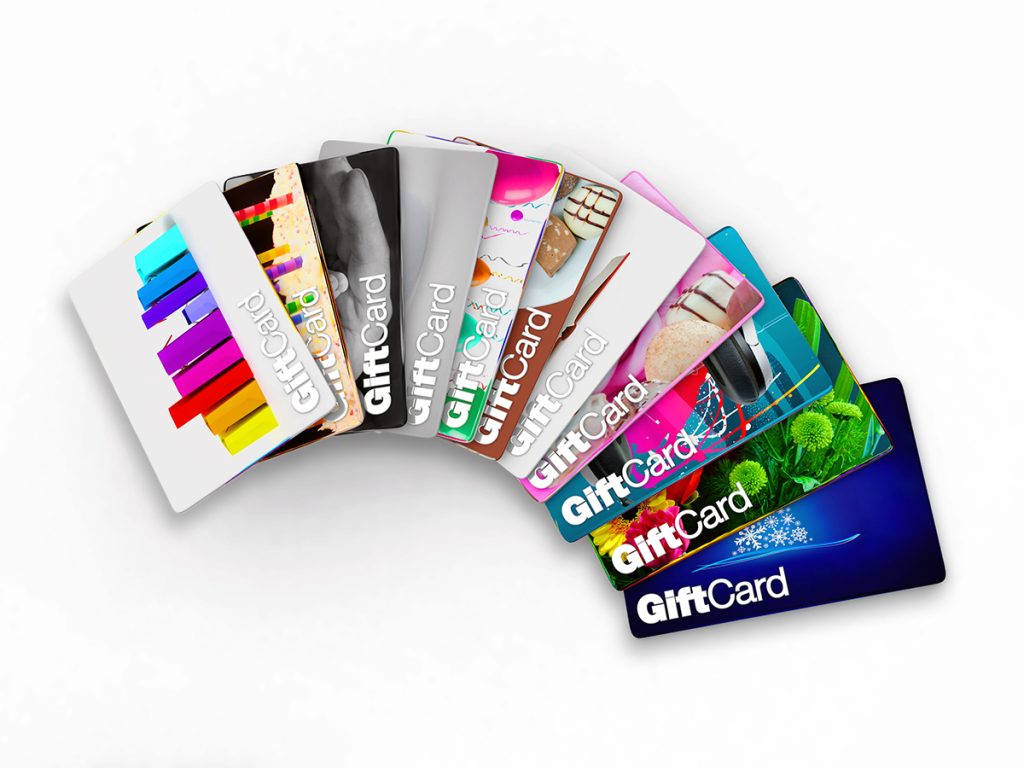
Magnetic stripe gift cards: gift cards with magnetic stripe allow you to gift a monetary amount to be spent within a store. They may have variable duration and value.
Secure magnetic stripe cards are for employee identification: magnetic stripe cards for employee ID are used in companies, controlling access to buildings, services, or specific areas, and allowing attendance tracking. Badges are also used within schools and universities.
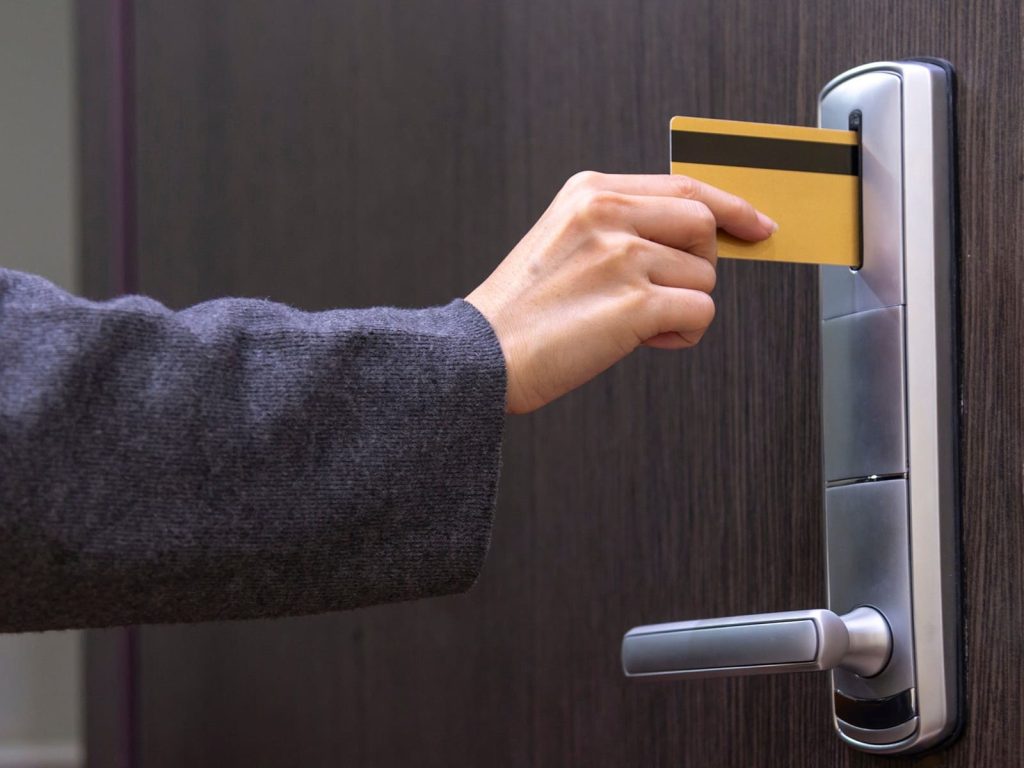
Hotel magnetic stripe cards: in hospitality facilities, magnetic stripe cards for hotel keycards regulate access to rooms and restricted areas.
Membership cards with magnetic stripe: they are useful for identifying and recognising members in cultural associations, non-profit organisations, and sports federations.
Magnetic cards are compliant with the ISO 7811 standard, which defines dimensions, encoding, and coercivity. Coercivity represents the intensity of the magnetic field and is measured in Oersted (Oe).
The magnetic stripe can have a coercivity of 300, 2750, or 4000 Oe, and based on the value, it is divided into two categories:
The magnetic stripe consists of a PVC layer composed of resinated ferromagnetic particles: data are stored by altering the magnetic orientation of these particles. The information is read by ‘swiping’ the card with the magnetic stripe inside a magnetic stripe card reader.
Magnetic stripe cards can be encoded with various categories of data, including: expiration date – for example in the case of gift cards – and programming information, such as numerical access codes, authorization levels, and operating parameters.
Magnetic stripe cards can be made from a variety of materials, including PVC and PETG, which are resistant to high and low temperatures, chemicals, and offer excellent printability; degradable PVC and recycled PVC, which share the same technical characteristics as standard PVC but are more sustainable.
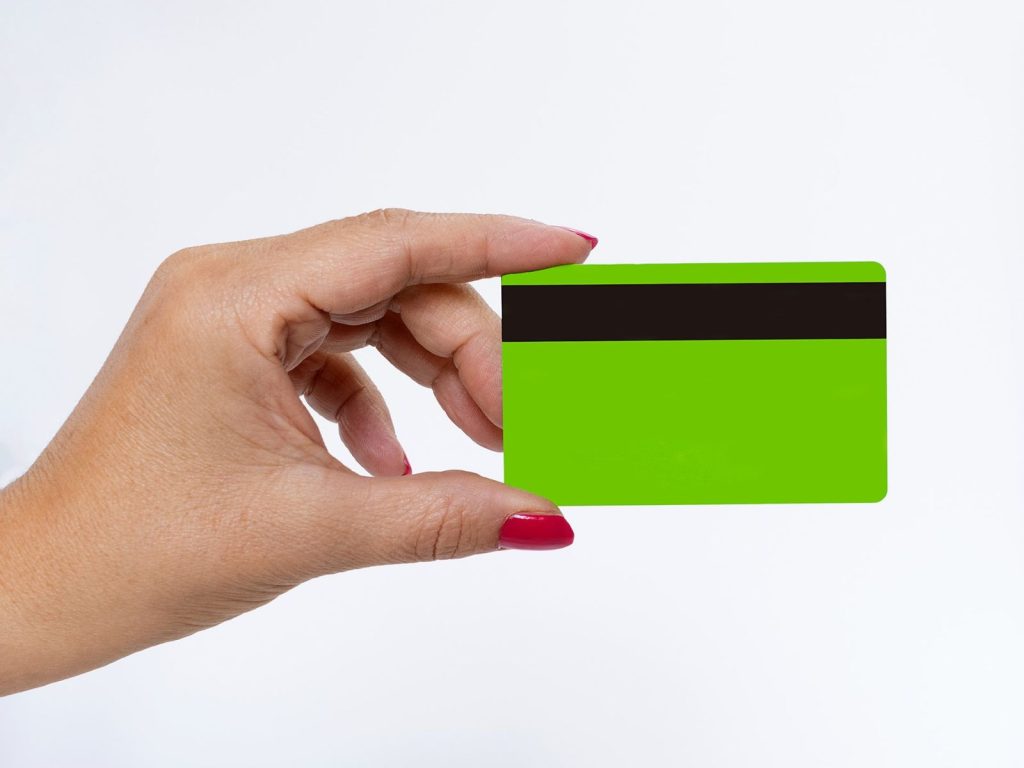
Magnetic stripes can be applied to the card using two methods: flush-on, where the stripe is inserted during the lamination process, and roll-on, where the stripe is applied subsequently. Additionally, magnetic stripe cards programming can be carried out into three tracks: ISO 1, ISO 2, and ISO 3.
At Partitalia, we offer custom magnetic stripe card printing services, including custom logo and graphic printing. Magnetic stripe card printing includes: 4-colour offset, silkscreen printing, digital printing, UV spot varnish, Hot stamping. Variable data printing, such as names and numbers, is achieved through techniques like thermographic printing, laser printing, inkjet printing, and embossing.
Here are the main questions about magnetic stripe cards and their use.
Magnetic cards feature a black or coloured ferromagnetic stripe on the back, which can be 12.75 mm high for three tracks or 8.4 mm high for two tracks, storing data readable by dedicated devices for identification or access purposes.
Magnetic cards store data through a ferromagnetic strip located on the back of the card. The strip consists of a layer of PVC, containing tiny resin-coated ferromagnetic particles. The card is read by swiping it through a magnetic card reader.
Thanks to their versatility, magnetic stripe cards are used for multiple applications: as gift cards in Retail and Large-Scale Distribution; for employee identification in companies and student identification in schools and universities; for access control in hotels and gyms; and as membership cards in cultural associations and sports federations.
Magnetic stripe cards store information such as the expiration date – if used as a gift card – and programming data, e.g. numeric access codes, authorisation levels, and operating parameters.
The security of magnetic stripe cards is evaluated by the coercivity, i.e. the strength of the magnetic field, which is measured in Oersted. The higher the Oersted value, the more secure the magnetic strip. The most secure magnetic cards are those with high coercivity (HiCo, 2750 Oe and 4000 Oe).
This site uses technical and profiling cookies.
You can accept, reject, or customize the cookies by clicking the desired buttons.
By closing this notice, you will continue without accepting.
Privacy Settings
This website uses cookies to improve your experience while you navigate through the website.
View the Cookie Policy View the Personal Data Policy
Google Analytics is a web analytics service provided by Google Ireland Limited ("Google"). Google uses the collected personal data to track and examine the usage of this website, compile reports on its activities, and share them with other Google services. Google may use your personal data to contextualize and personalize the ads of its advertising network. This integration of Google Analytics anonymizes your IP address. The data sent is collected for the purposes of personalizing the experience and statistical tracking. You can find more information on the "More information on Google's handling of personal information" page.
Place of processing: Ireland - Privacy Policy
Additional consents:
Ally is a software, provided by Elementor Ltd, that enhances usability and optimizes digital content, making it accessible and usable for a wide range of users, including those with disabilities.
Place of processing: Israel - Privacy Policy
Cloudflare Web Analytics is an anonymized analytics service provided by Cloudflare Inc. that gives the owner insight into the use of this website by users.
Google Ads conversion tracking is an analytics service provided by Google Inc. that is used to connect data from the Google Ads advertising network with actions performed on this Site.
Place of processing: Ireland - Privacy Policy
Google Fonts is a service used to display font styles operated by Google Ireland Limited and serves to integrate such content into its pages.
Place of processing: Ireland - Privacy Policy
Google Maps is a maps visualization service provided by Google Ireland Limited. This service is used to incorporate content of this kind on its pages.
Place of processing: Ireland - Privacy Policy
Gravatar is an image visualisation service provided by Automattic Inc. that allows this Website to incorporate content of this kind on its pages.
Place of processing: United States - Privacy Policy
Jetpack is an advertising service provided by Jetpack Digital LLC.
Place of processing: United States - Privacy Policy
