

RFID cards represent the most versatile and widely used solution in identification and access control. Contactless cards leverage Radio Frequency Identification technology, allowing the card to be read without any contact with the reader.
RFID technology operates through the following components: the RFID tag, a transponder containing an electronic circuit (RFID chip) capable of storing data, and an antenna that enables the transmission of this information; an RFID reader, which emits a radio signal capable of activating the chip and receiving the stored data in return.
Contactless cards work as RFID tags: the RFID chip and antenna are integrated into the card’s support and inserted during production. The cards are read by simply bringing them close to the RFID card reader.
RFID cards operate in Low Frequency (125 kHz) and High Frequency (13.56 MHz), with a reading distance of up to 10-15 cm, and in Ultra High Frequency (868-920 MHz) for longer reading distances.
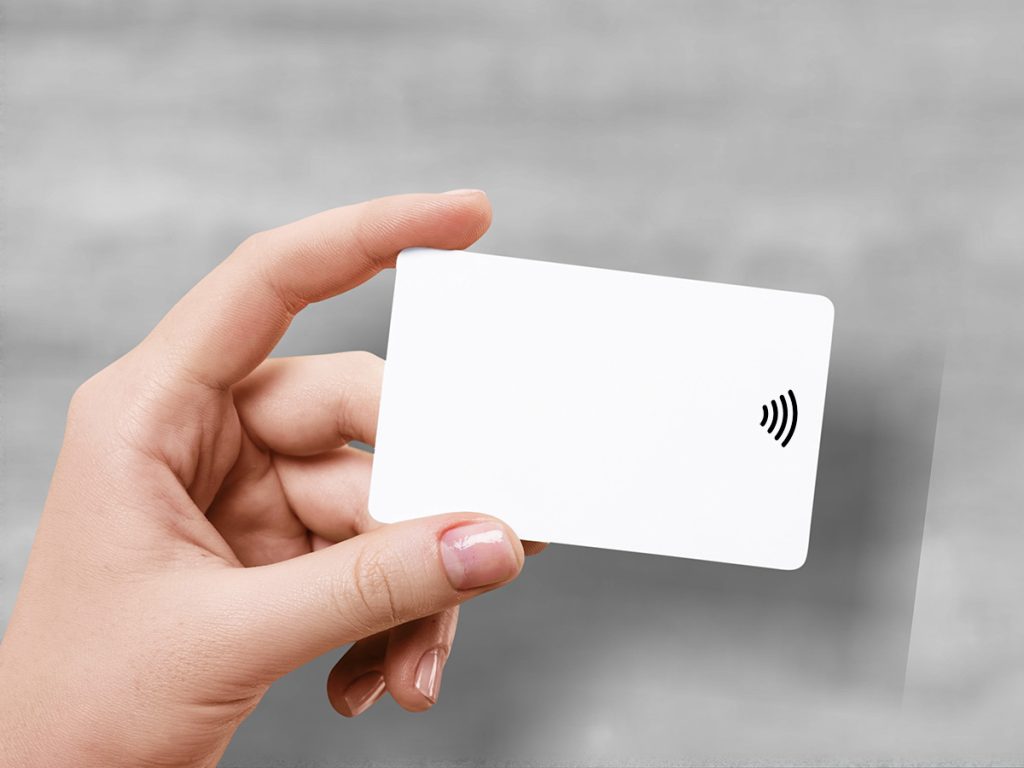
Compared to barcode cards, magnetic stripe cards or contact chip cards, RFID access control cards offer greater security, convenience and resistance:
Various industries use RFID cards for many applications:
Secure RFID cards for access control in hotels, campsites, and gyms: contactless cards are the most widely used solution for regulating access to facilities in the hospitality sector (hotels, campsites, holiday resorts) and leisure sector (sports centres, spas, and swimming pools). RFID card access control systems are also used to manage access to parking areas and port gates.
Electronic purse: RFID cards can act as electronic wallets, storing a credit balance for use at vending machines, for paying at bars, restaurants, or canteens in corporate or university environments, or for specific services at hotels and gyms.
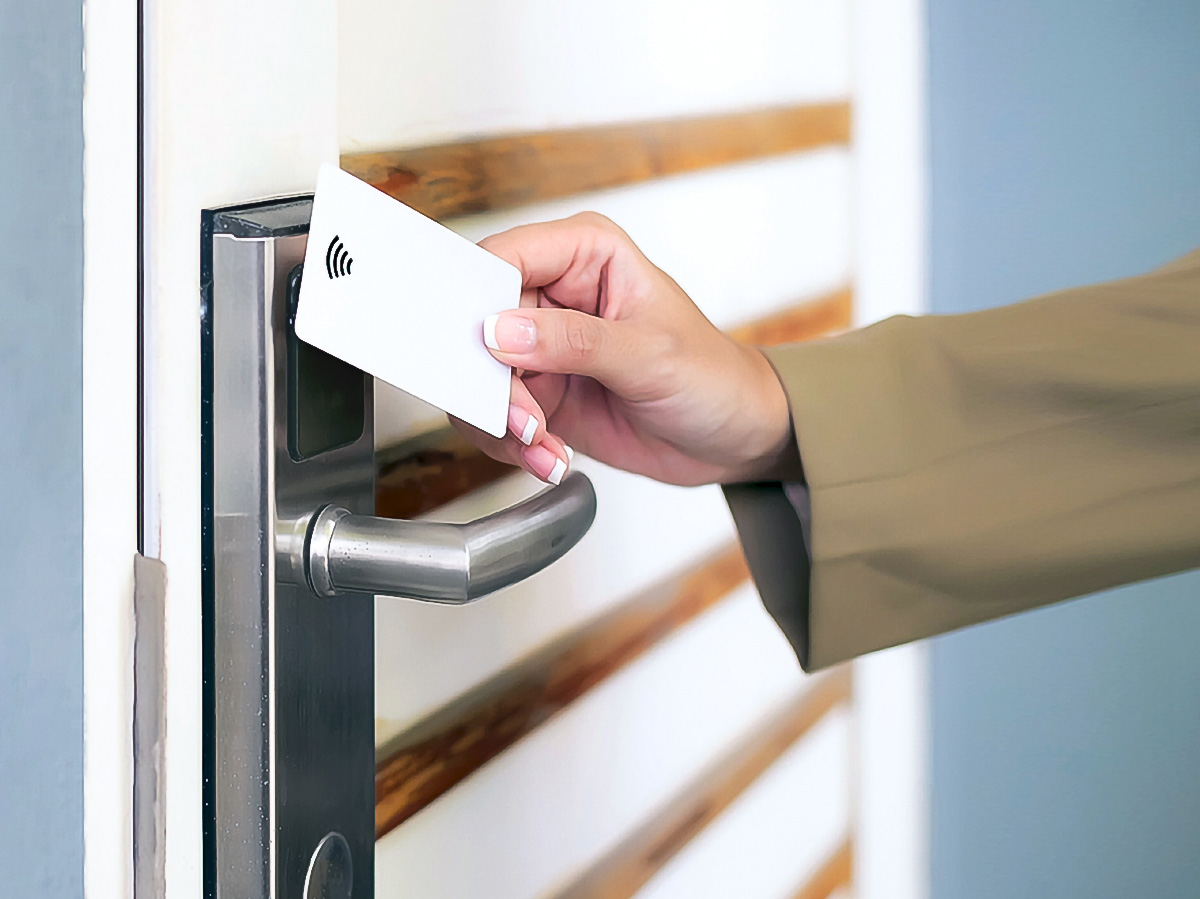

Membership cards: secure RFID card solutions are used in sports federations, to identify members and control access.
Waste management: RFID cards allow access to controlled-access bins.
Electric vehicle charging: contactless cards enable electric vehicle charging at charging stations equipped with an RFID reader.
When selecting the best RFID card solutions for businesses, the first step is to choose the right technology. At Partitalia, we offer over 70 different RFID chips in our catalogue, including combinations. We supply 125 kHz cards with EM4100, EM4200, Q5 or 5555, ATA5577 chips, and 13.56 MHz cards with Mifare Classic, Mifare Plus, Icode chips, and many more.
Additionally, we stock NFC cards, which operate at 13.56 MHz, including Mifare Desfire cards, Mifare Ultralight cards, and cards with Ntag chips. NFC cards allow data transmission at a range of approximately 4 cm, offering increased security due to the short distance of information exchange.
Our RFID cards are available in various materials:
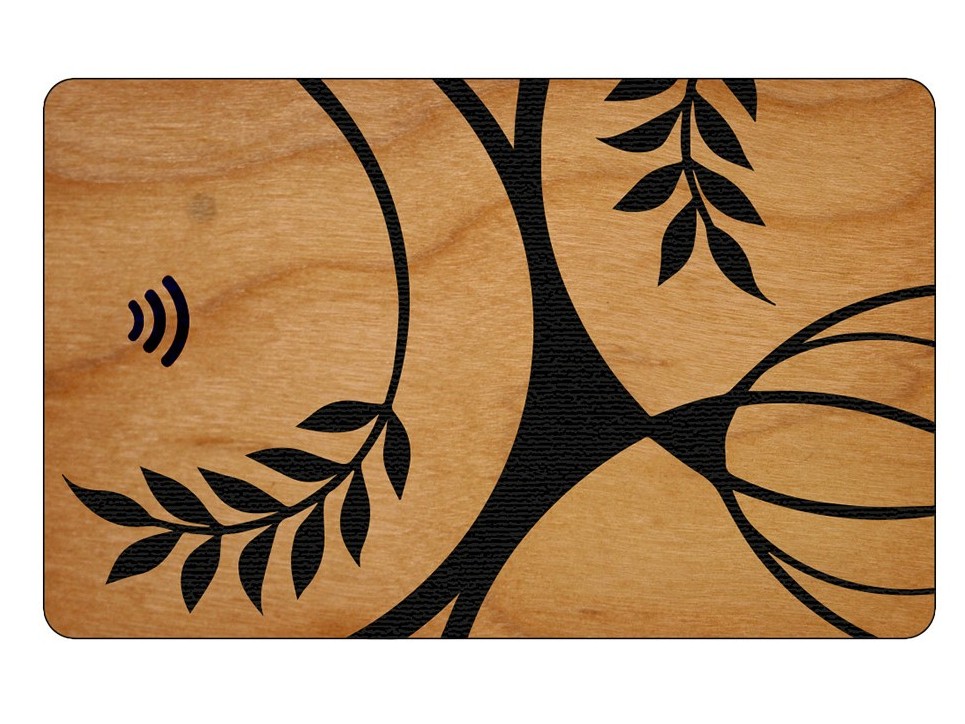
In our production facility, we make customisable RFID cards, using various printing and customisation techniques. For plastic cards, chromatic printing is done using 4-colour offset, silkscreen printing, digital printing, UV spot varnish, or hot stamping, while RFID card customisation is done via thermographic printing, laser printing, inkjet printing, or embossing. For wooden cards, printing is done via offset, screen printing, and laser, with customisation done using laser or inkjet printing.
In this section, we have collected the most frequently asked questions about RFID cards and the benefits of these cards, the most popular for identification and access control.
RFID cards are the most widely used solution in identification and access control. They use Radio Frequency Identification technology to communicate with the reader without any contact.
RFID cards include an electronic circuit — the RFID chip — that stores data, and an antenna, which transmits the data via radio waves. The reader emits a radio signal that activates the RFID chip, receiving the stored information in return. The card is simply read by bringing it close to the RFID reader.
RFID cards are widely used for identification and access control in hospitality (including hotels, campsites, resorts), leisure (gyms, swimming pools, spas), companies, schools and universities, and sport federations. They are also used in waste management, for opening controlled-access bins. Again, they are used as electronic purses in vending machines and electric car recharging.
The data stored on an RFID card depend on the functionality of the card. The data generally present are: personal data (name, surname, date of birth and other identifying information); access credentials (username, password and other authentication and authorisation information); credit (if used with the electronic purse functionality).
RFID cards offer significant advantages over those with magnetic stripes: they do not require contact with the reader, reducing the risk of wear and tear and damage. They are readable without a specific orientation, ensuring greater reliability. As the chip is not visible from the outside, it is protected from dirt and external agents.
RFID cards offer advanced levels of security: the data stored on these cards are protected by sophisticated encryption protocols, ensuring high levels of security against unauthorised access.
This site uses technical and profiling cookies.
You can accept, reject, or customize the cookies by clicking the desired buttons.
By closing this notice, you will continue without accepting.
Privacy Settings
This website uses cookies to improve your experience while you navigate through the website.
View the Cookie Policy View the Personal Data Policy
Google Analytics is a web analytics service provided by Google Ireland Limited ("Google"). Google uses the collected personal data to track and examine the usage of this website, compile reports on its activities, and share them with other Google services. Google may use your personal data to contextualize and personalize the ads of its advertising network. This integration of Google Analytics anonymizes your IP address. The data sent is collected for the purposes of personalizing the experience and statistical tracking. You can find more information on the "More information on Google's handling of personal information" page.
Place of processing: Ireland - Privacy Policy
Additional consents:
Ally is a software, provided by Elementor Ltd, that enhances usability and optimizes digital content, making it accessible and usable for a wide range of users, including those with disabilities.
Place of processing: Israel - Privacy Policy
Cloudflare Web Analytics is an anonymized analytics service provided by Cloudflare Inc. that gives the owner insight into the use of this website by users.
Google Ads conversion tracking is an analytics service provided by Google Inc. that is used to connect data from the Google Ads advertising network with actions performed on this Site.
Place of processing: Ireland - Privacy Policy
Google Fonts is a service used to display font styles operated by Google Ireland Limited and serves to integrate such content into its pages.
Place of processing: Ireland - Privacy Policy
Google Maps is a maps visualization service provided by Google Ireland Limited. This service is used to incorporate content of this kind on its pages.
Place of processing: Ireland - Privacy Policy
Gravatar is an image visualisation service provided by Automattic Inc. that allows this Website to incorporate content of this kind on its pages.
Place of processing: United States - Privacy Policy
Jetpack is an advertising service provided by Jetpack Digital LLC.
Place of processing: United States - Privacy Policy
