
Home / Markets / RFID tag markets / Healthcare
RFID tags for healthcare stand out as an advanced solution for efficient management and accurate identification of resources in both healthcare and veterinary settings.
RFID technology for medical facilities — through the use of hard tags, labels, and RFID wristbands — represents a revolution, delivering a concrete improvement in the management of patients, healthcare professionals, and hospital departments.
From hospital settings, for tracking patients, surgical instruments, medications, medical records, hospital linens, to veterinary applications, the use of RFID tags – such as RFID hard tags, RFID labels and RFID wristbands – for medical purposes brings significant advantages:
Thanks to RFID technology, each object or individual is uniquely identified, ensuring precise control of flows and movement, with significant benefits in terms of efficiency, productivity, and patient tracking.
RFID technology protects sensitive data and prevents errors and losses, guaranteeing certain identification of patients and animals. This approach significantly strengthens security in the medical sector, improving data management and integrity.

RFID-based traceability allows for the optimization of processes in various areas, reducing time and costs while increasing efficiency and productivity, contributing to improved hospital management.
Immediate access to critical information ensures effective management of resources and activities, improving the quality of service provided.
RFID technology allows for complete tracking of surgical instruments, linens, and gowns, thanks to the use of RFID hard tags and RFID labels for healthcare, while RFID wristbands for healthcare are used for patient identification.

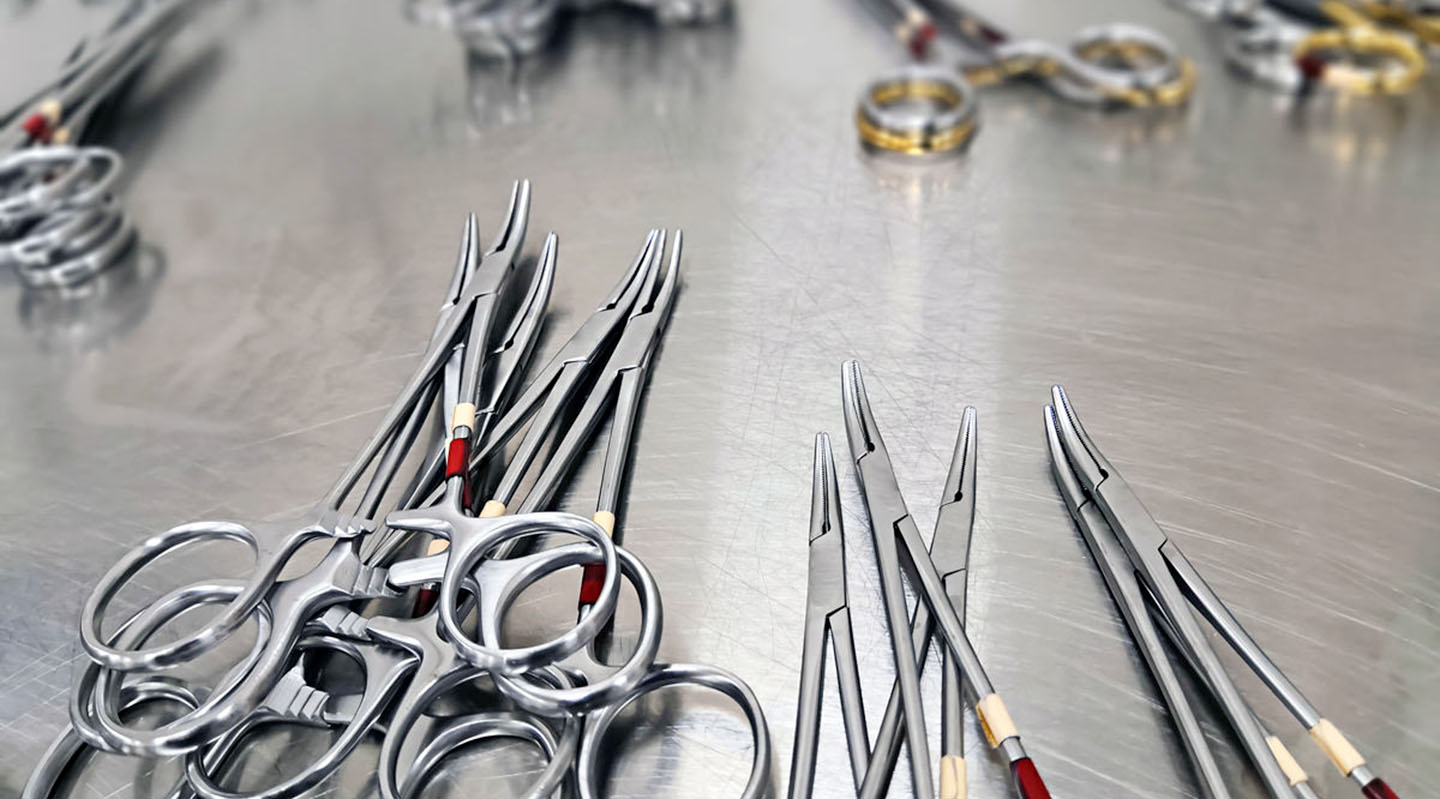
RFID hard tags for the operating room, made of materials like nylon or epoxy resin resistant to high temperatures and chemicals, ensure precise monitoring of surgical instruments like forceps, scalpels, needle holders, and scissors, while RFID labels are applied to gauze. RFID hard tags and labels for the operating room enable inventory automation and ensure reliable reading even after sterilisation.

RFID tags for hospital asset management, such as RFID labels for hospital inventory control and hard tags, are invaluable for efficient pharmaceutical warehouse management, optimising logistics, inventory, distribution, and drug disposal. Particularly important is the management of medical records: the use of RFID tags and electronic health records speeds up archiving, enables certain patient identification, and eliminates the risk of errors. Furthermore, hard tags are useful for indoor localization applications: when placed on the floor, they allow for the localization of AGVs (Automated Guided Vehicles), facilitating the transportation of medications and meals within departments. RFID wristbands for patient monitoring are used to store demographic information, medical history, or medication dosage and allow medical staff to retrieve data at any time, quickly.

RFID labels for hospital laundry and RFID hard tags for hospital laundry, also known as RFID laundry tags, are applied to medical staff uniforms for unique identification, ensuring their return to the rightful owner.

RFID tags for vehicle access control facilitate the tracking of passages in parking lots or areas reserved for hospital staff.

RFID technology, in the veterinary field, can be used for:
In this case, glass tags, special RFID hard tags for animals, are implanted by a veterinarian through ingestion, subcutaneous injection, or in the ear lobe. RFID glass tags for animals allow for the unique identification of pets and livestock, ensuring complete traceability, a certain origin, and the storage of crucial information for health prophylaxis.
RFID tags enable precise monitoring of livestock, preventing theft and disease, optimising production, and ensuring food safety.


The use of RFID technology for pets and livestock represents a step forward in health management; in this context, RFID hard tags – such as RFID glass tags for animal health monitoring – for the veterinary sector guarantee precise and reliable traceability, optimising animal care and monitoring.
Find out more about RFID tags for healthcare: hard tags, labels, and RFID wristbands that deliver a concrete improvement in the management of patients and hospital resources.
RFID tags are used extensively in healthcare for patient identification, asset tracking, and supply chain management. This technology enhances patient safety by preventing medication errors, streamlining inventory management, and improving the overall efficiency of healthcare operations.
RFID tags, when used in hospital laundries, can bring significant advantages, including: automatic tracking during washing, drying, ironing, and redelivery; precise identification and automatic sorting of laundry to the correct washing and drying lines; monitoring of the washing and sanitization cycle of each item, ensuring that the necessary hygiene parameters are met; and optimization of inventory management by identifying the most frequently used items.
RFID tags provide an advanced solution for vehicle access control in medical facilities, enabling automated management of access for ambulances, emergency vehicles, suppliers, and staff. They facilitate parking management with automatic rates or free access and monitor vehicle flows, collecting data on entries, exits, and access frequency. Additionally, they prevent unauthorised access through automatic alerts and integrate data with other information systems within the facility.
Glass tags are small RFID tags, typically implanted subcutaneously and used for animal identification. These devices consist of a microchip encased in biocompatible glass, making them durable and suitable for long-term use in animals. The glass tags contain a unique identification code and an antenna for communication with RFID readers, which emit low-frequency radio waves. The microchip then transmits the identification code which is decoded and sent to a computer system linked to a database containing all the information related to the animal.
RFID labels are revolutionising the medical sector by optimising pharmaceutical warehouse management through precise inventory monitoring and automation, reducing waste and stockouts, and ensuring traceability for patient safety. In addition, in the operating room, they automate the inventory and ensure a high-performance reading even after the sterilisation of surgical instruments.
Yes, RFID wristbands are used in patient tracking systems for hospitals. RFID patient identification wristbands store and transmit unique data about the hospitalised individual. The RFID wristband is assigned to the patient upon admission, when a handheld or stationary RFID reader emits a radio signal to the wristband. The microchip integrated into the wristband transmits the stored data to the RFID reader, which decodes it into digital data and sends it to the healthcare information system.
RFID labels and RFID hard tags, while both using RFID technology for identification, serve distinct purposes within healthcare settings. RFID labels are typically adhesive and flexible, making them suitable for attaching to a wide range of items. On the other hand, RFID hard tags are more durable and often embedded within items or attached with screws or rivets.
RFID laundry tags revolutionise hospital laundry management by providing real-time tracking of linens and garments throughout the entire laundering process. By attaching an RFID tag to each item, hospitals can accurately monitor the location and status of linens, ensuring timely delivery to patient rooms and preventing loss or misplacement. These tags enable automated tracking, reducing manual labour and errors. Ultimately, RFID laundry tags enhance infection control, improve patient satisfaction, and contribute to overall operational efficiency within hospitals.