Home / Cards / Materials

CARD MATERIALS

At Partitalia, we offer a wide range of card materials, designed to meet every need.

Among the most popular options are PVC cards and PETG cards, plastic cards renowned for their excellent technical features. We also provide degradable PVC and recycled PVC cards, as well as paperboard cards and wooden cards, which help reduce environmental impact while maintaining high-quality standards.

Card in PVC nera

PVC CARDS

PVC cards are the most common type of card, thanks to their excellent technical properties and affordable cost. 

PVC (polyvinyl chloride) is known for its elasticity, ease of processing, high resistance to chemical agents, and excellent printability – qualities that make plastic cards an ideal solution for various uses, from access control to loyalty programmes. It has an operating temperature range between -10°C and 60°C, ensuring reliable performance even under challenging conditions.

The features

PVC cards have a thickness ranging between 0.76 and 0.82 mm – with a tolerance of +/-0.08 mm – in accordance with the ISO 7810 standard.

At Partitalia, we produce custom PVC cards with magnetic stripes, barcodes, contact chips, and RFID chips, printed in colour or black and white.

In our production facility, we print PVC cards using various techniques — offset, silkscreen printing, digital printing, UV spot varnish, and hot stamping — and customise them with thermography, laser, inkjet, or embossing printing to ensure impeccable graphic quality.

Degradable PVC card

DEGRADABLE PVC CARDS

Degradable PVC cards represent a more sustainable alternative to standard PVC cards.

Degradable PVC is made so by additives which accelerate its decomposition in environments rich in microbes, such as biologically active landfills. These additives are particularly ‘appetising’ to existing microorganisms in the waste, such as fungi, bacteria, and algae, which recognise these tracers and secrete acids capable of metabolising the PVC, breaking the molecular chain and transforming the polymer into simple molecules – water, carbon dioxide, methane -, biomass, and inorganic compounds.

The characteristics

From a technical perspective, degradable PVC cards maintain the same characteristics as those made from the standard material, namely printability, long lifespan, elasticity, and high chemical resistance. 

However, with identical technical performance, degradable PVC offers undeniable advantages in terms of environmental impact: it degrades much faster, both in the wet waste fraction and subsequently in landfill, without releasing dioxins and other harmful organochlorines generated by the combustion process.

Recycled PVC card

RECYCLED PVC CARDS

Recycled PVC is obtained from PVC processing waste. PVC is equipped with advanced mechanical recycling properties and can be recycled up to 8 times, depending on the application. 

The recycled material is produced by companies certified for plastic recycling, which recover production waste from manufacturing companies: after being selected based on colour and characteristics, these waste materials are cleaned of any additives, such as magnetic stripes or processed pieces, and reground. 

The key features

From a technical perspective, recycled PVC cards maintain the same characteristics as those made from traditional PVC: long durability, excellent printability, chemical resistance, and elasticity. 

Their use, however, offers significant benefits for the environment, allowing for the saving of petrochemical resources and emissions required to produce the polymer from scratch, as well as a reduction in landfill waste.

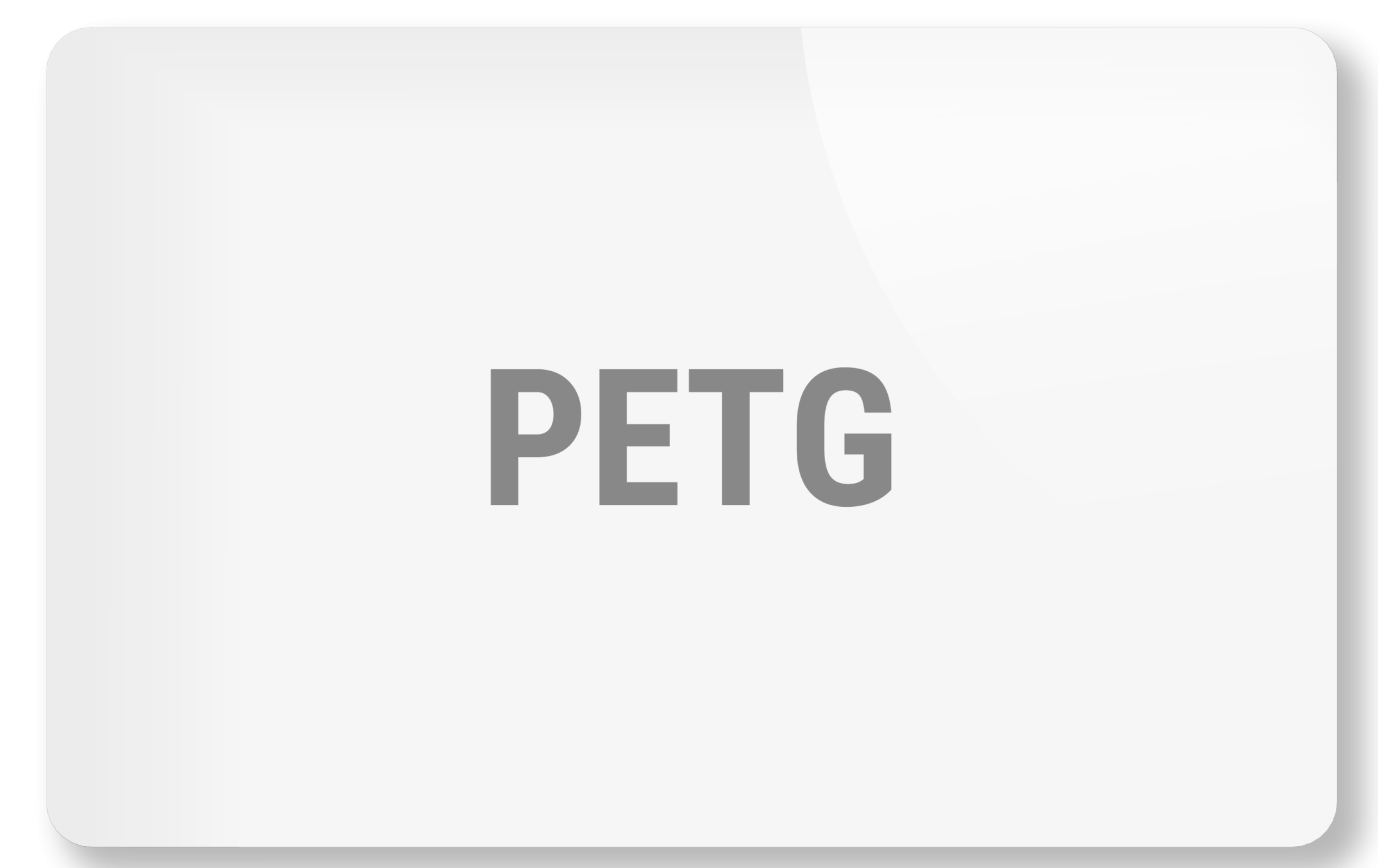
Card in PETG

PETG CARDS

PET plastic (polyethylene terephthalate) is globally recognised as safe, non-toxic, resistant, flexible, and 100% recyclable. For card production, PETG (PET with the addition of glycol) is used.

The characteristics

PETG is employed to produce loyalty cards, gift cards, and cards for access control. The main characteristics of PETG are chemical resistance, ease of lamination, printability – with offset printing, silkscreen printing, digital printing, UV spot varnish, hot stamping – and complete recyclability. 

Plastic cards made of PETG are compatible with the application of magnetic stripe, contact chip, and contactless RFID chip, and can be customised via thermographic printing, laser printing, inkjet, or embossing. At Partitalia, we also produce cards made from recycled PETG.

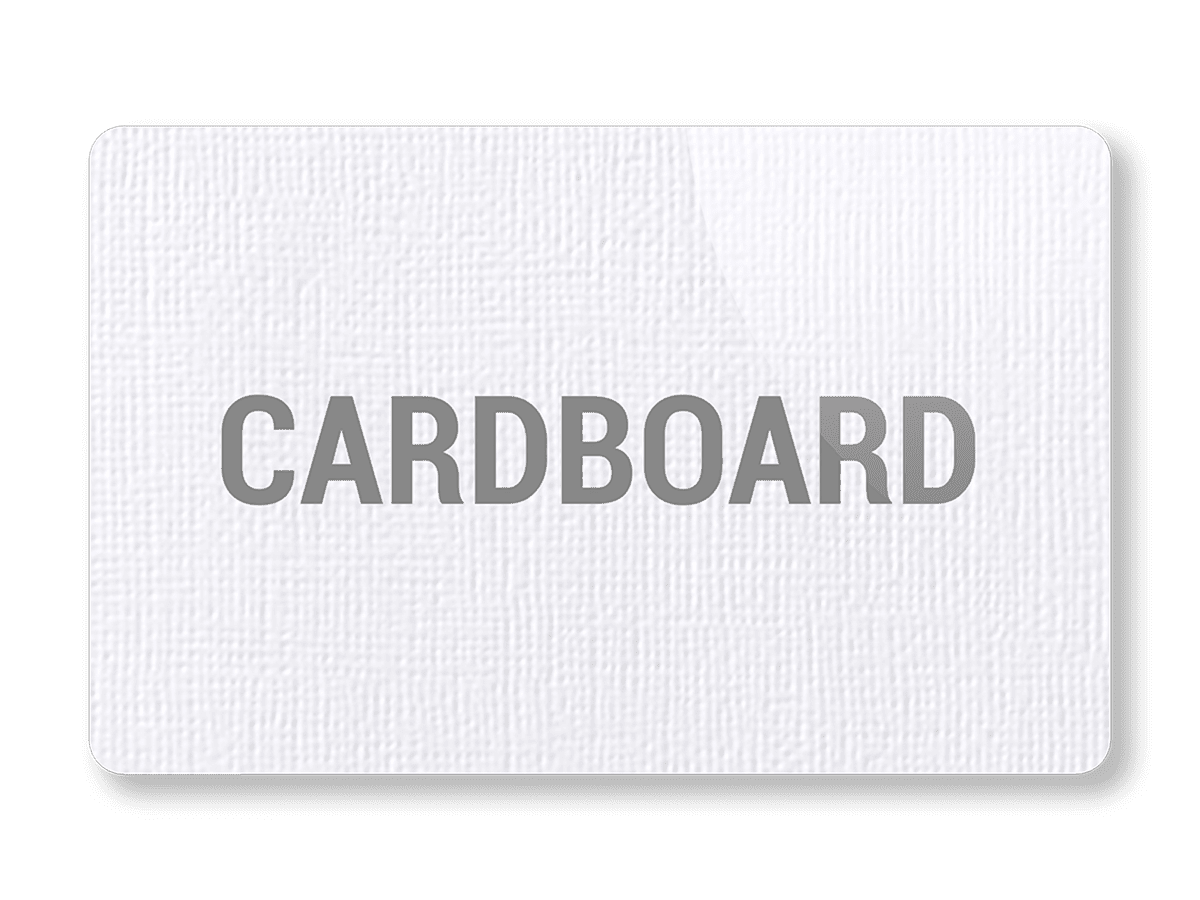
Cardboard card

PAPERBOARD CARDS

Paperboard is a material made entirely of paper fibre, primarily used for gift cards. Completely biodegradable, it has good compatibility with card production processes.

The features

Paperboard cards are characterised by excellent printability, using both offset and silkscreen printing techniques. This material is usually employed for the production of eco-friendly gift cards or paperboard cards for events. This type of card is customisable with barcode and numbering printing, using inkjet printing.

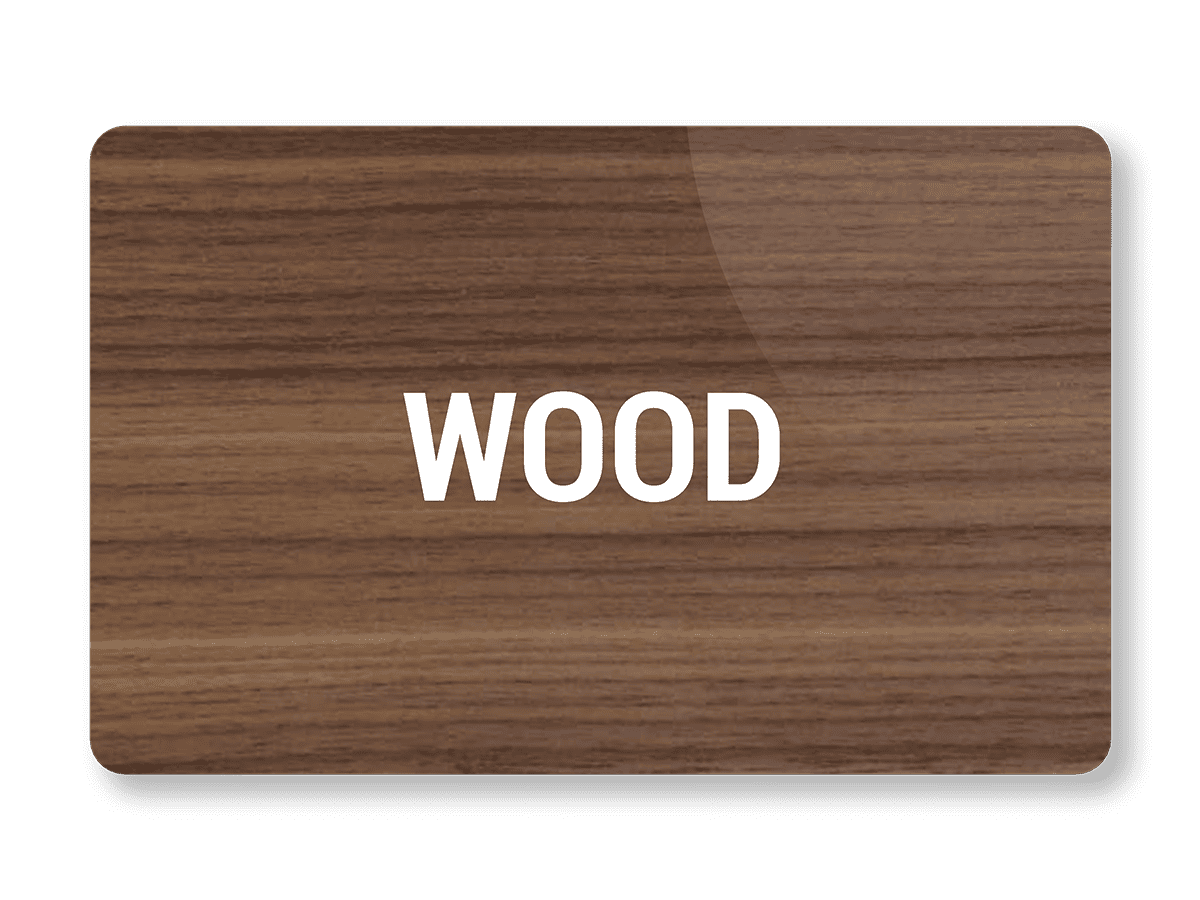
Wooden card

WOODEN CARDS

In the landscape of eco-friendly cards, wooden cards are particularly appreciated for their elegant and distinctive appearance.

Wood is a completely recyclable and biodegradable material. Its naturally present grain gives each card a unique design.

The key features

The mechanical characteristics of this material allow for the creation of ecological and sustainable wooden cards with high resistance and durability, maintaining the standard thicknesses and dimensions – 86 x 54 x 1.3 mm – in compliance with the ISO 7810 standard.

Partitalia wooden tiles are available in bamboo, maple and lime. They can be printed using offset, pad printing and silkscreen printing techniques and customised using laser or inkjet printing. 

RFID technology can be integrated within wooden cards, useful for access control in hotels and accommodation facilities. Furthermore, wooden cards can be used to create loyalty and gift cards for the Retail and Mass Market Distribution.

FAQs CARD MATERIALS

Do you have doubts about which material to choose for your customised cards? In this section, you will find the answers to the most common questions about card materials, to help you identify the solution that best suits your needs.

What is the most durable material for a customised card?

PVC is the most resistant and durable material for producing customised cards. It offers excellent performance in terms of flexibility, ease of processing, chemical resistance, and print yield.

Yes. All cards, whether in PVC, PETG, wood, or paperboard, can be personalised with the printing of logos or graphics, with progressive numbering, barcodes, or QR codes, using professional printing techniques that vary according to the material.

PVC cards generally have standard dimensions, in compliance with the ISO 7810 standard — 86 x 54 mm — and a thickness ranging between 0.72 and 0.86 mm.

Drag & Drop Files, Choose Files to Upload
Nome candidato
Drag & Drop Files, Choose Files to Upload