

Home / Markets / RFID tag markets / Retail
Retail RFID tags and RFID labels enhance business process efficiency in the Retail industry. Successful RFID implementation in Retail mandates meticulous planning and the selection of suitable RFID labels to align with specific industry requirements.
By optimizing efficiency, security, and profitability, in-store RFID solutions are revolutionizing the way Retail businesses operate with highly personalized shopping experiences.
Here is a detailed overview of the main benefits of RFID in Retail:
In warehouse management using RFID technology, RFID labels for inventory management or RFID tags for Retail monitor items in real time throughout the entire supply chain, allowing for real-time product tracking, increased visibility of available stock, and a reduction in losses.
The use of RFID tags for Retail inventory enables automatic and precise item counting, accelerating processes. In fact, RFID systems for real-time Retail inventory reduces manual errors and the risk of out-of-stock situations, allowing for the optimisation of stock management and the replenishment process.


The use of RFID tags for Retail inventory enables automatic and precise item counting, accelerating processes. In fact, RFID systems for real-time Retail inventory reduces manual errors and the risk of out-of-stock situations, allowing for the optimisation of stock management and the replenishment process.
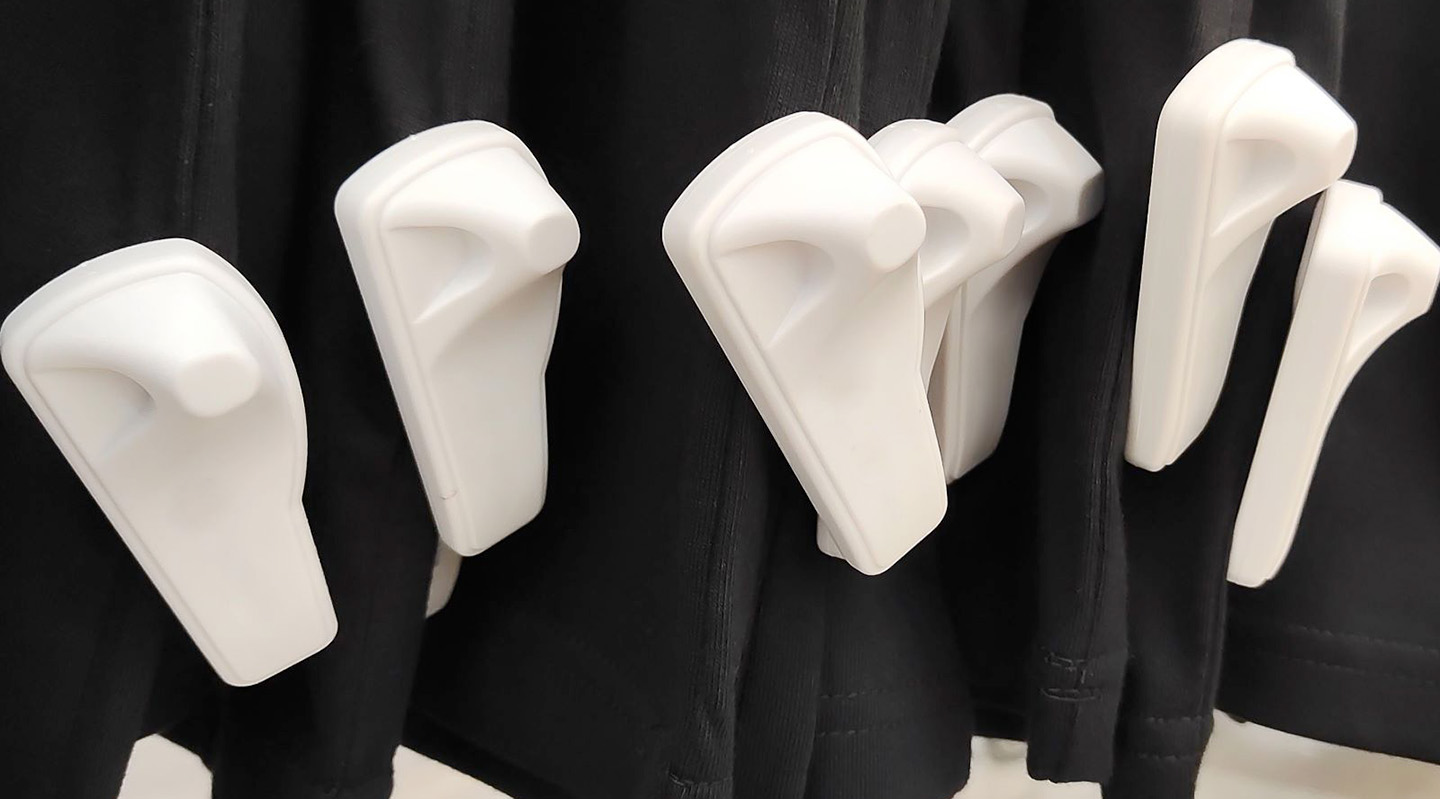
RFID security in Retail is made possible by the integration of RFID anti-theft tags, special RFID hard tags and anti-theft RFID labels for Retail stores, which enable a significant reduction in theft losses.
RFID technology can be used to authenticate products, preventing counterfeiting. Authentic products are marked with an RFID tag containing a unique code that is then verified by the Retailer.
Analysing the data collected from RFID labels for Retail optimises shop layouts strategically for sales improvement in different ways.

RFID tags can be used to track customer movement within a store, providing valuable insights into how customers interact with the space. This data identifies high-traffic areas, bottlenecks, and underutilized zones, facilitating modifications to the point of sales layout to improve customer flow and enhance the shopping experience. For instance, popular products are repositioned to high-traffic areas, making it easier for customers to find them.

RFID hard tags and smart RFID labels can also be used to monitor which products are being taken from and placed on shelves, an example are custom RFID labels for Retail merchandise tracking. This information is utilized to position the most popular items in high-traffic areas and to increase the visibility of slower-moving products. For example, complementary products are grouped together to encourage customers to purchase them together.

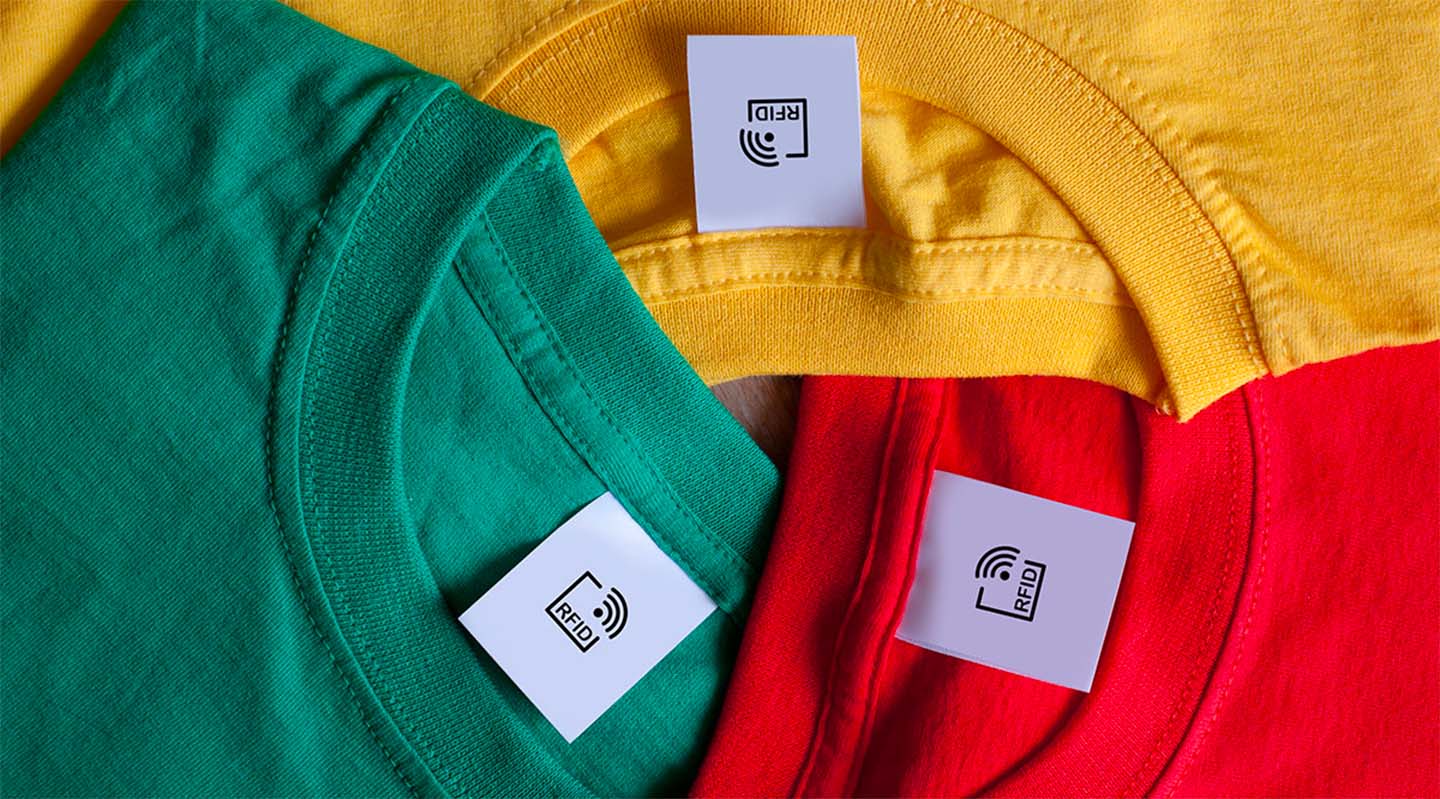
RFID technology enhances the customer fitting room experience. For example, integrating RFID tags into garments allows for the utilization of encoded data to interact with smart mirrors in fitting rooms. This assists customers in making quick and informed purchasing decisions. Alternatively, RFID tags can be used to manage queues, enabling customers to join a virtual queue for checkout and then receive a notification when it is their turn, reducing wait times.
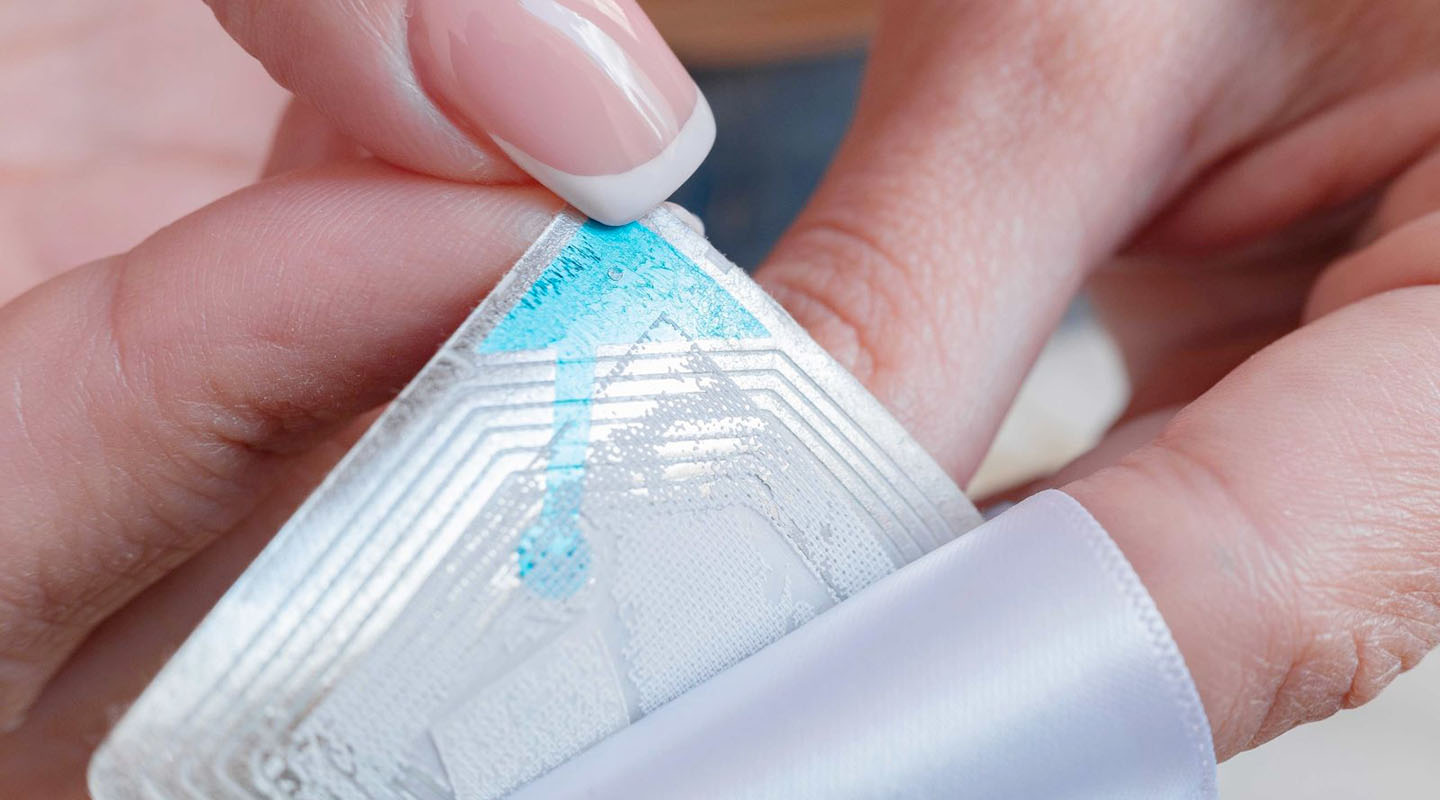
In Partitalia, we offer an extensive catalogue of RFID tags for automated Retail operations specifically designed for Retail applications. Our custom RFID labels for Retail, or smart labels, are manufactured from flexible materials such as adhesive paper, PET, polyester, and nylon taffeta — two fabrics commonly used for fashion labels. Available in various shapes and sizes, they can be applied to a wide range of products. Their cost-effectiveness allows for large-scale application at competitive prices.
Specifically designed for anti-theft purposes are our Retail tags, robust ABS hard tags equipped with EAS (Electronic Article Surveillance) functionality, designed for the Fashion&Retail sector and applicable to fabrics via a special metal pin.


Considering implementing RFID technology in your Retail store? Have questions or concerns about how it works and its benefits? Consult our RFID tag FAQs for Retail and discover everything you need to know.
RFID tags in Retail inventory management enable real-time tracking of items from the supply chain to the sales floor. This technology provides accurate and up-to-date inventory data, reducing stockouts and overstocking. RFID can also automate tasks like receiving, put-away, and cycle counting, improving efficiency and reducing labour costs.
RFID labels offer numerous benefits in Retail, including enhanced inventory accuracy, reduced labour costs, improved supply chain visibility, and the ability to automate various processes. By providing real-time data on product location and movement, RFID enables Retailers to optimise stock levels, prevent theft, and deliver a better customer experience.
RFID tags significantly enhance anti-theft measures in Retail environments by providing real-time visibility of merchandise. These tags, when attached to products, enable Retailers to track items as they move through the store, making it easier to detect and prevent theft. Additionally, RFID systems can trigger alarms when items with untagged or deactivated tags pass through security gates, deterring shoplifting and improving loss prevention.
Absolutely! RFID labels are a game-changer for real-time inventory tracking in Retail. By attaching RFID tags to individual items, retailers can accurately monitor stock levels, track product movement, and identify items quickly. This technology offers numerous benefits such as reduced labour costs, improved inventory accuracy, and enhanced supply chain visibility.
RFID tags significantly enhance the customer experience in Retail settings by streamlining processes and providing valuable insights. These tags enable faster checkout times, personalised product recommendations, and efficient omnichannel experiences. By providing real-time inventory data, retailers can ensure product availability and reduce out-of-stock situations, leading to higher customer satisfaction.
Anti-theft RFID labels work by emitting a radio frequency signal when they pass through a deactivation gate at the point of sale. This signal is detected by the gate, which then deactivates the label, preventing it from triggering an alarm at the store exit. If an item with an active RFID label attempts to pass through the exit without being deactivated, the security system will sound an alarm, alerting store staff to a potential theft.