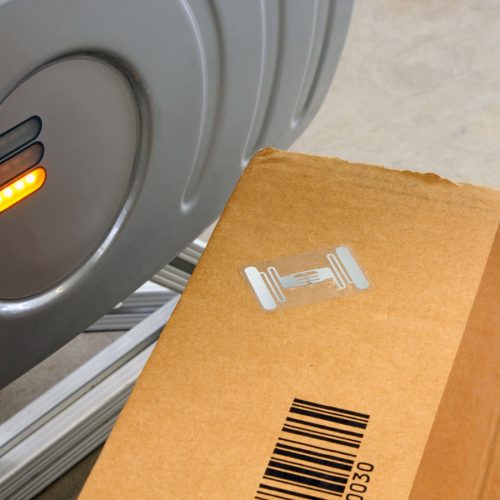
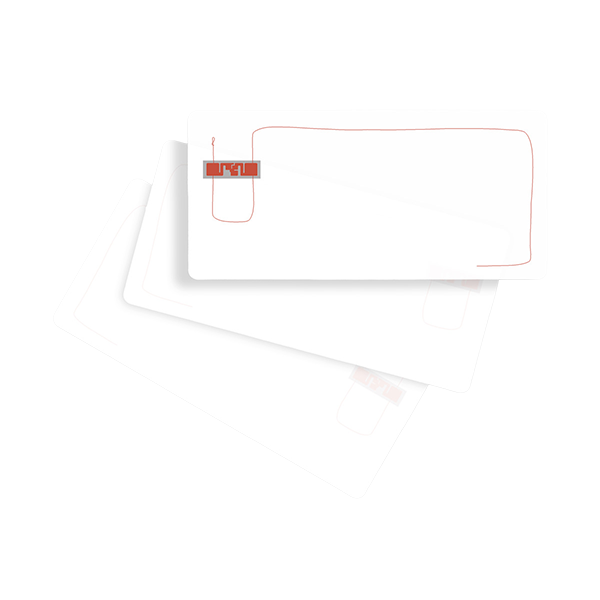
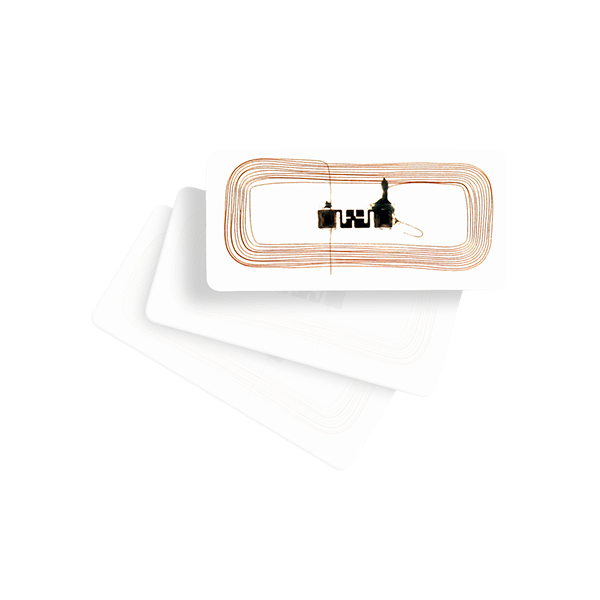
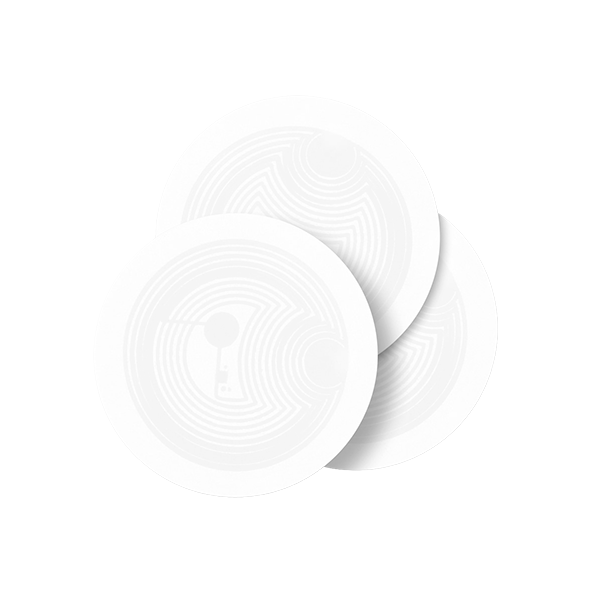
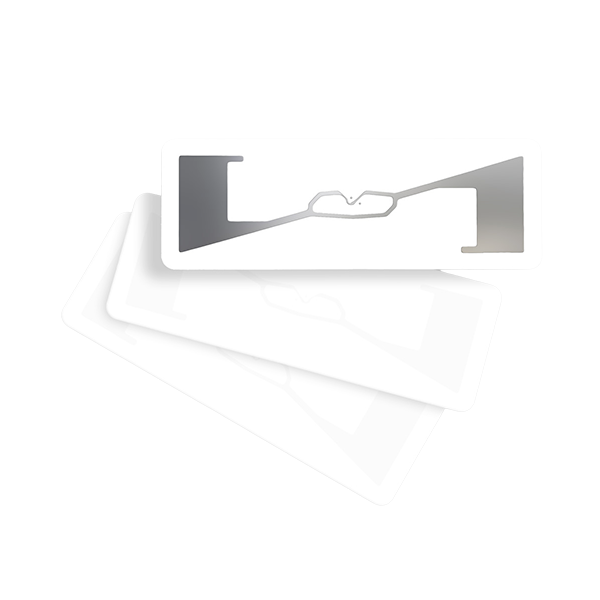
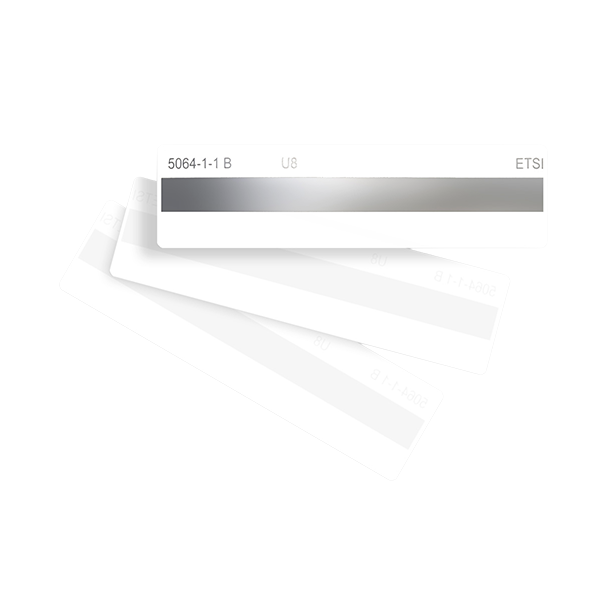
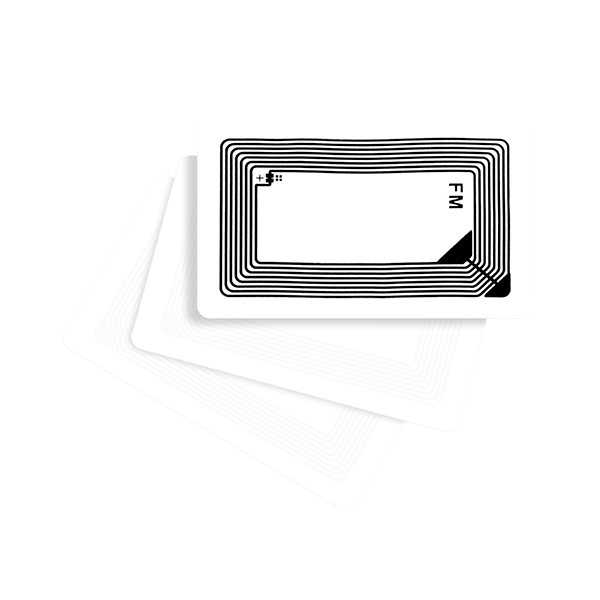
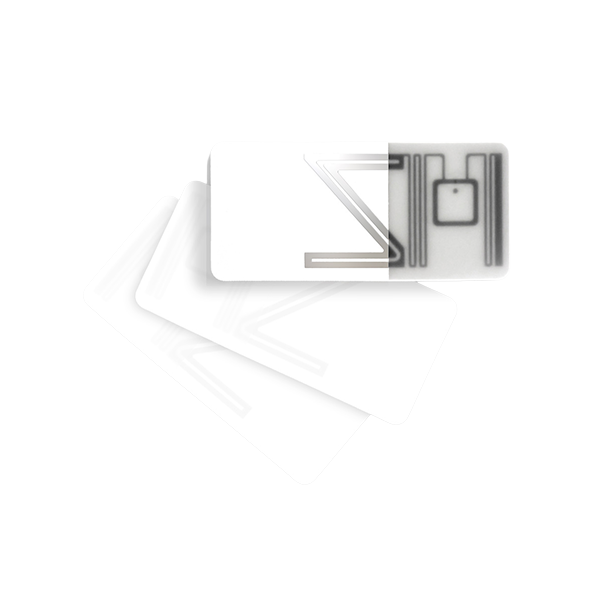
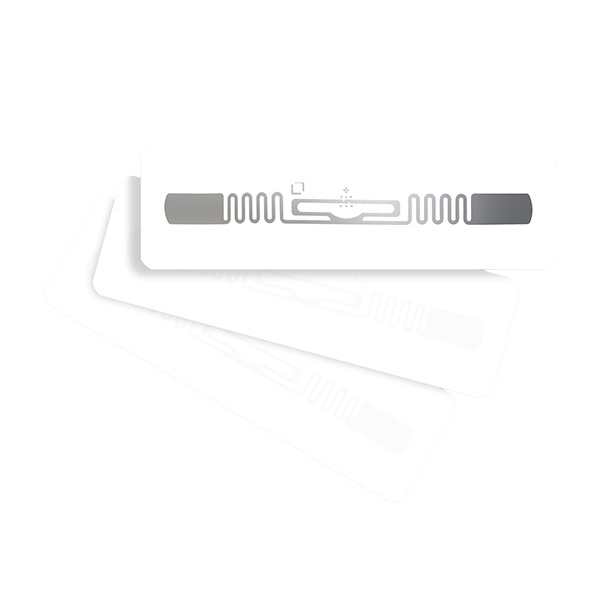
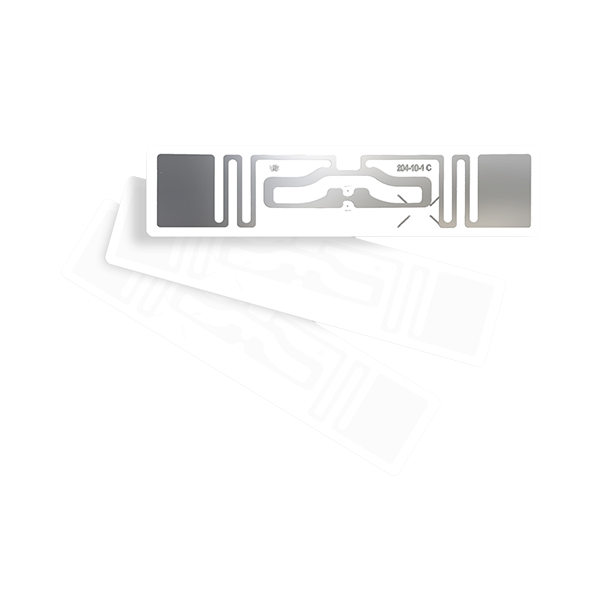
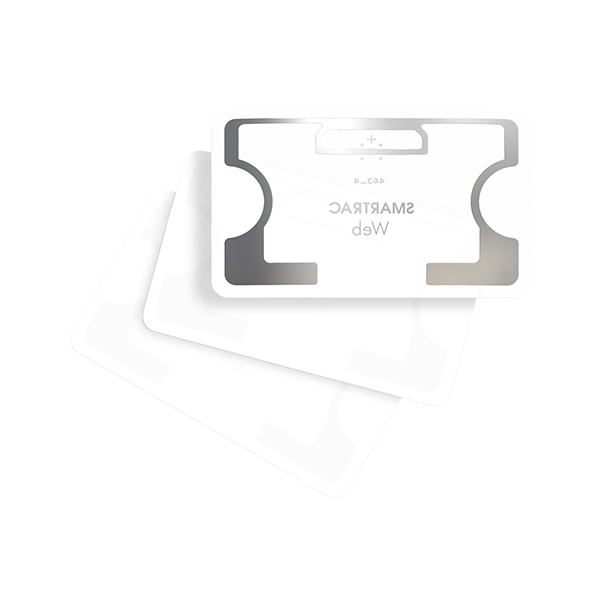
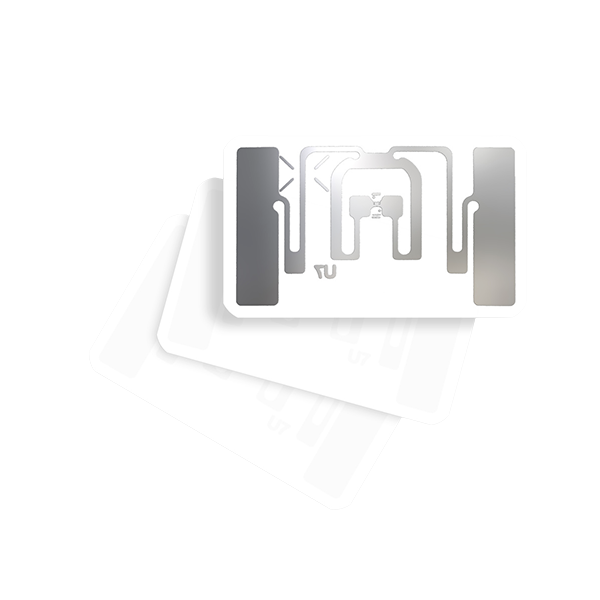
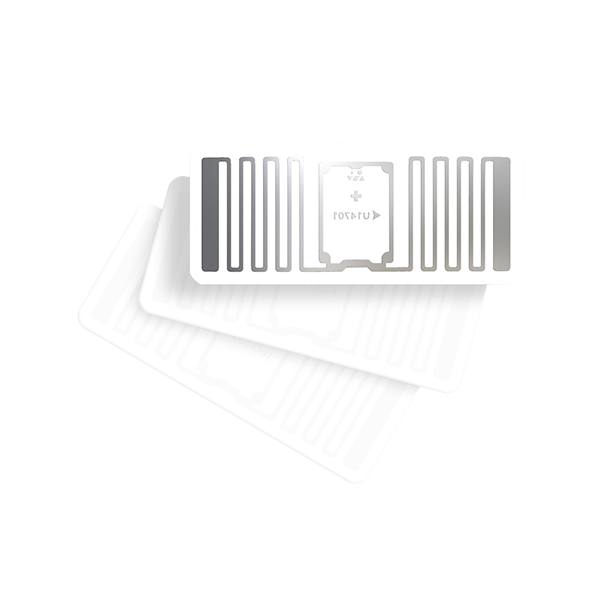
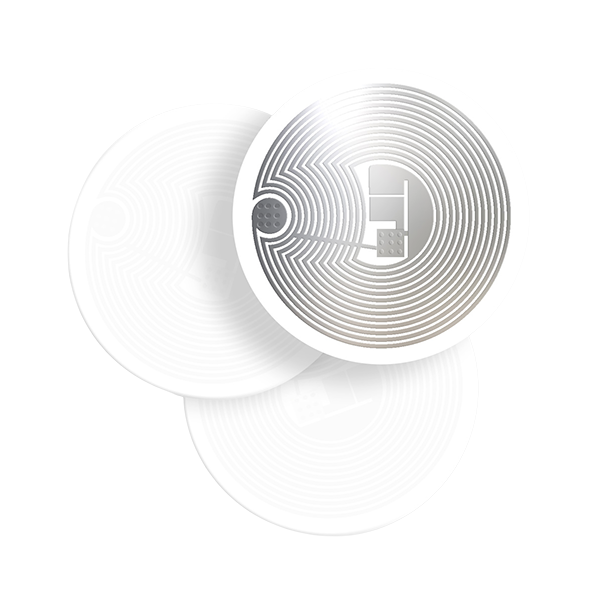
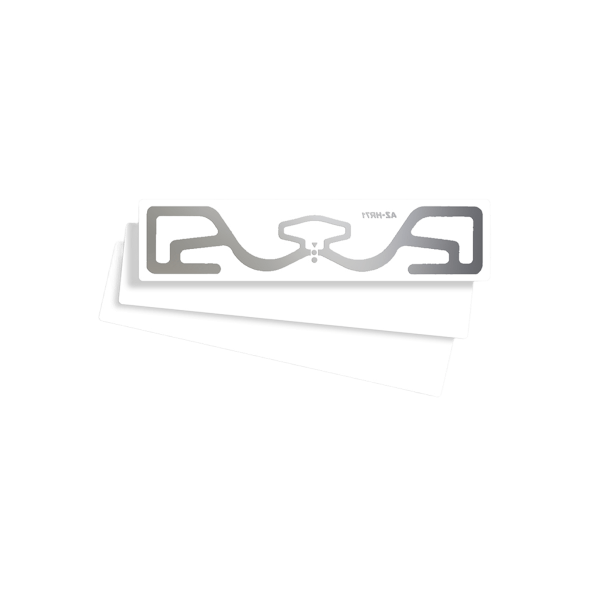
Partitalia’s RFID labels are crafted from a variety of materials and consist of multiple overlapping layers. Specifically, RFID labelling features: an outer layer — made of paper, fabric, or plastic materials such as PVC, PET, and polypropylene —, a layer of adhesive to which the antenna and the RFID chip (also known as an aluminium inlay) are bonded, and a thin secondary adhesive coating.
In RFID fabric labels — most commonly used in the fashion industry — the antenna is typically integrated within the cloth, which is then sewn onto the garment for identification. RFID wet inlays, on the other hand, feature an outer layer (usually PET) containing the inlay, with an adhesive backing applied.
All Partitalia RFID labels are available in the following frequencies: LF, HF (including NFC technology), and UHF.
Most adhesive RFID labels can be customised with a logo printed in full colour or black and white using offset or inkjet techniques, while thermographic printing is available in black and white. For RFID fabric labelling, customisation is exclusively performed via thermal transfer.