Home / Markets / Card markets / Electric cars
Electric vehicle charging cards featuring RFID technology represent the ideal solution for making the charging of electric vehicles faster and easier.
In Europe, ChargeUp recorded the presence of 950,000 public charging points at the end of the first quarter of 2025, with growth forecast to reach 3.8 million over the next decade¹.
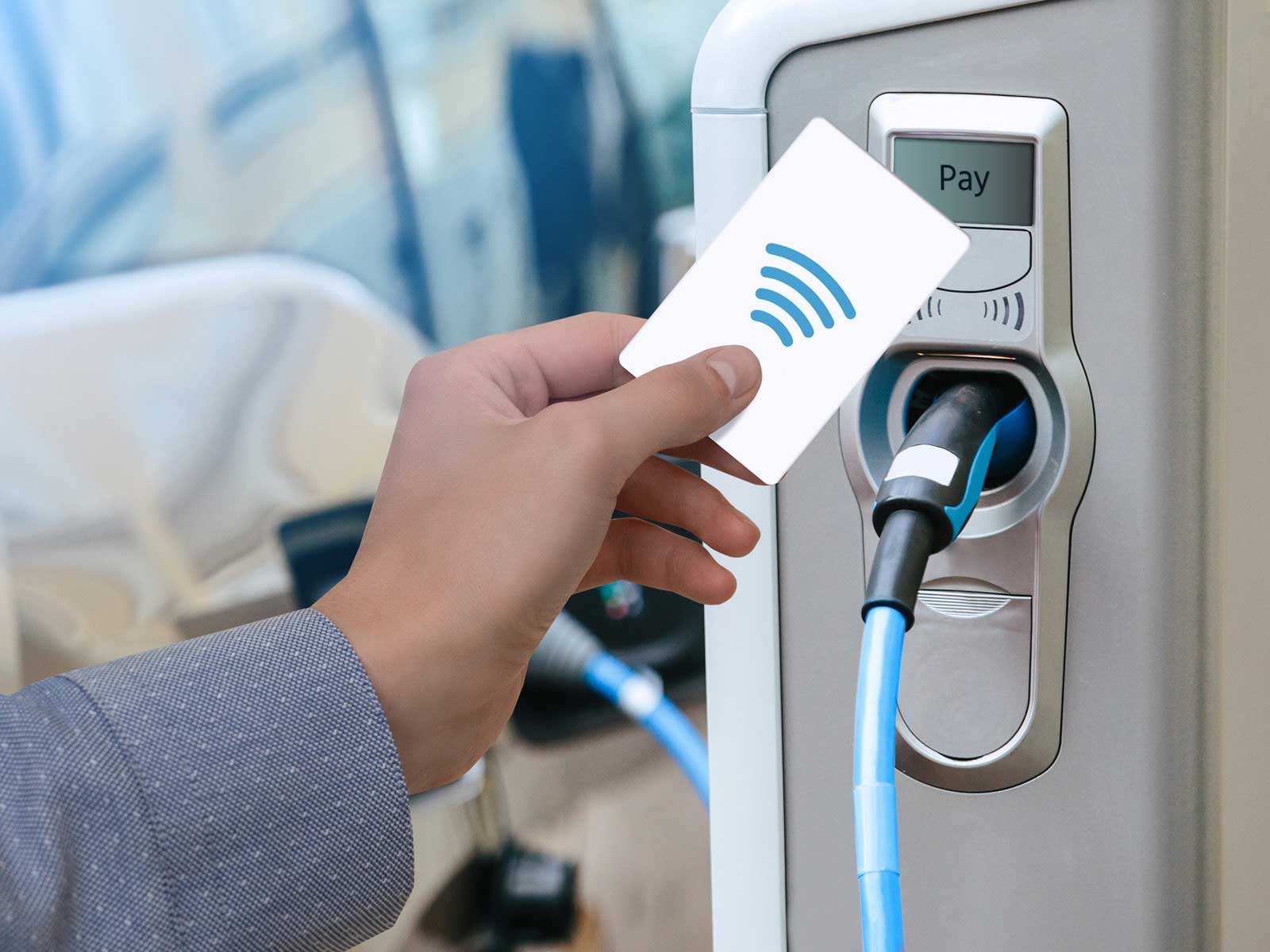
The use of cards for charging electric cars allows for energy replenishment in a practical and intuitive manner. These cards, equipped with a contactless RFID chip, are able to activate the supply of electricity simply by holding them near the charging symbol on the pillar, which is fitted with an RFID reader.
There are two main types of RFID EV charging cards: prepaid cards, which allow you to load credit that is deducted with each charge, and postpaid cards, where all charges are recorded and invoiced at the end of the month.
Thanks to RFID technology, these cards offer significant benefits:


When choosing the best EV charging cards for your needs, it is essential to consider the frequency — Low Frequency 125 kHz or High Frequency 13.56 MHz — and the type of RFID chip supported by the reading system.
At Partitalia, we also offer a wide selection of card materials:
Partitalia produces customised electric car charging cards, printing unique and distinctive cards with logos, colours, and graphics that reflect the company’s identity.
Top RFID charging cards for electric cars are in
They can be printed using various techniques depending on the material: 4-colour offset, silkscreen printing, digital, UV spot varnish, and hot stamping for plastic materials; offset, silkscreen printing, and laser engraving for wood.
At the end of the printing process, for both ISO format and minicards, we offer a fulfillment service, which includes flow pack – inserting the cards into a transparent thermoplastic bag – or packaging and shipping to the customer’s specified address, or packaging in cardboard boxes (card packaging), also customised according to customer needs.
Here are the main questions about RFID cards and their use for charging electric cars.
EV charging cards enable the activation of charging stations and manage energy payments. Equipped with an RFID chip, the card communicates with the RFID reader, enabling the delivery of electrical energy. There are two types of electric car charging cards: prepaid, which deduct the remaining credit, and postpaid, which record consumption for monthly billing.
The RFID EV charging card enables the activation of charging stations and initiates the electric vehicle charging process. The card must be brought into proximity with the RFID reader, which reads the information stored on the card’s chip, including a unique identifier and user or subscription data. Subsequently, the system verifies the authenticity of the card and its association with a user account. If authentication is successful, the charging station is enabled, and the user can proceed with charging. The amount of energy delivered is recorded and linked to the card, and payment is processed according to the user’s chosen tariff plan.
Partitalia, in its Lainate plant, produces electric vehicle cards customised with company logos and colours, to fully reflect the characteristics of the brand. We offer a wide range of printing techniques, including offset and screen printing.
As a leader in RFID technology, the company provides cards for LF or HF frequency charging, to meet customer needs.
RFID EV charging cards use Radio Frequency Identification technology to authenticate users. The card usually contains prepaid credit or is linked to a postpaid account. The payment is processed automatically when the reloading session starts, based on the stored information.
App-based payments often use QR codes or NFC technology to authenticate users. The user scans the QR code or taps their phone on the charging station’s NFC reader. The payment information is stored within the app, linked to a payment method like a credit card or digital wallet. Payment is processed through the app when the charging session starts.
1. Source: ChargeUp Europe, 2025 State of the Industry Report.